Baby Sleep Strategies: 7 Proven Tips to Sleep Through the Night

Proven Strategies to Help Your Baby Sleep Through the Night
Getting your baby to sleep through the night is every sleep-deprived parent's goal. Alongside a consistent bedtime routine, the following baby sleep strategies can encourage longer, uninterrupted sleep.
- Keep feed, play and sleep separate to teach self-settling.
- Offer one last feed before bedtime for extra hours of sleep.
- Stretch out the time between night feeds from 3-4 months.
- Shorten night-time feeds gradually until they are dropped.
- Don't rush to feed your baby the moment they wake.
- Skip non-essential night-time diaper changes.
Keep Feed, Play and Sleep Separate
Keep these three steps separate by making sure feeding happens in your arms, play happens on the play mat and sleeping happens in the cot. This helps you recognise when your baby is tired and teaches your baby to settle themselves and sleep on their own, so they don't need rocking back to sleep at night.
Offer One Last Feed Before You Go to Bed
Before you turn in, try waking your baby for a late-night feed. Even a small amount of milk may give you an extra hour or two of sleep. If this backfires and your baby wakes more often, give them more milk at their last feed before bedtime.
Stretch Out the Night Feeds
By the time your baby is 3 or 4 months old, you can start stretching out the time between feeds. Add about half an hour between night feeds every other night, slowly extending the gap until your baby is ready to give up their night feed and sleep through the night.
Shorten Night-Time Feeds
Gradually reduce the amount of milk your baby drinks at night feeds until they're ready to give up this meal. Put a little less in the bottle or spend less time on each breast, decreasing the amount every night.
Don't Rush to Feed Your Baby
If your baby wakes up crying, wait a while before offering a feed. They might settle or fall asleep again. If crying grows insistent, try to soothe them with a quiet lullaby or pat them gently. When your baby realises waking won't lead to a feed, they're more likely to sleep through the night.
Skip Unnecessary Diaper Changes
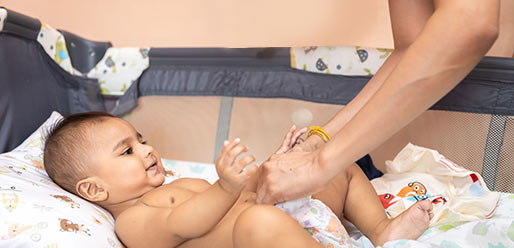
Do away with diaper changes in the middle of the night unless your baby is in a complete mess. If you must change a dirty diaper, keep the lights dim with as little talking or interaction as possible, so your baby doesn't think it's time to wake up and party.
Do you know that an average baby will need 1057 nappy changes in the first 6 months? Get exclusive promotions and free diaper samples by joining the Huggies Club now!
"The information contained in this site is for informational purposes only and is not intended to be a substitute for professional medical advice, diagnosis or treatment. Always seek the advice of your doctor or other qualified healthcare provider with any questions you may have regarding a medical condition. You should never delay seeking medical advice, disregard medical advice or discontinue medical treatment because of information on this site. To the extent permitted by law, Kimberly-Clark excludes liability or responsibility for claims, errors or omissions on this site, and may amend material at any time without notice."