Your 9 Month Old Baby: Development, Feeding and Play
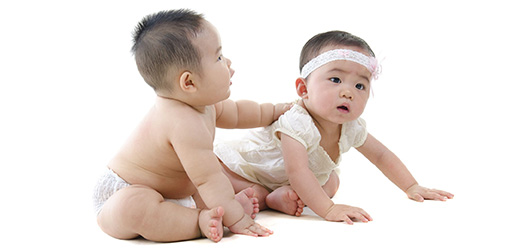
Get ready for more exploring this month as your 9 month old baby learns to propel themselves across the floor. They may shuffle on their bottom, commando crawl or creep along with most of their weight on their tummy. Whichever way works for them, they are building movement skills. Many parents say they see the world in a whole new light with a baby in the house, as the simple pleasures of discovery can be contagious.
Feeding and Sleeping
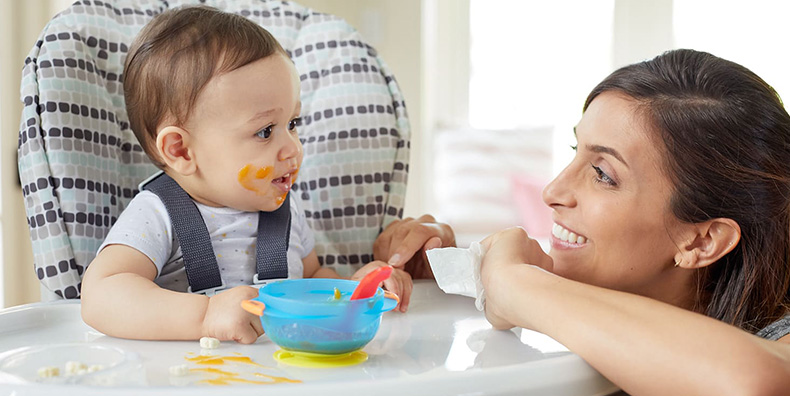
This is a messy age. Your baby will be keen to feed themselves, so let them explore their food and learn how to transfer it to their mouth. Offer a variety of finger foods in a range of colours, textures and tastes, and let them choose what and how much they eat. You will still spoon pureed and mashed foods, but give them a spoon to experiment with too.
Sleeping remains important at 9 months. Your baby may drop from 3 to 2 naps a day and become cranky and overtired in the transition. Watch for tired cues such as rubbing their eyes, grizzling, putting their head on your shoulder and having little tolerance for games, and avoid situations where they become overtired. A fairly predictable daily routine benefits you both.
Behaviour
You may notice high-pitched squeals this month as your baby develops their vocal range. Watch your baby's responses to a loud sudden noise to see if their eyes move equally and can focus on an object, and be aware of how they move their body. Parents are usually the first to notice a developmental or physical problem, and early assessment and treatment lead to better outcomes. If you have any concern, even a nagging doubt, that's reason enough to have your baby checked.
Developmental Milestones
Watch your baby learn to pull themselves to stand and develop balance. They may use your legs as a ladder to climb up, so think about how you react. Babies are perceptive about their parent's emotions, so try to be positive and reassuring when they learn new skills. They will also become more proficient at sitting this month and be able to get into a sitting position from their tummy, all of which depends on plenty of floor time.
Growth
If none of your baby's teeth have come through yet, this may be the month, though teething times are highly individual and a wait-and-see approach is usually recommended. Children literally grow overnight while asleep, releasing growth hormones and conserving energy. As long as your baby is gaining weight, is happy and energetic and reaching their milestones, try not to be concerned. Percentile growth charts are an ideal way to check your baby is tracking along their individual percentiles.
Keeping Well
If you are bottle feeding, you may want to stop sterilizing the bottles and feeding equipment now. Just remember to wash the bottles and everything else very carefully in clean, hot, soapy water and rinse well.
Play and Interaction
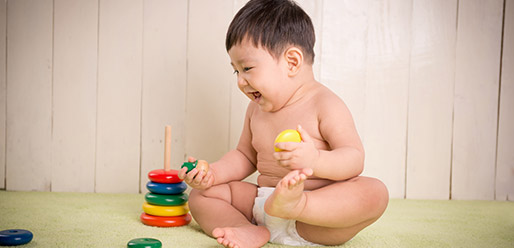
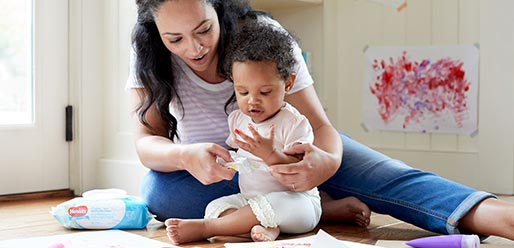
Your 9 month old is just as interested in a rolled-up piece of paper as an expensive toy. It is colour, texture, noise and shape that attract them to an object. Get down on the floor, scan for dangerous items and play silly games, hiding toys so they can find them easily and focusing on fun. The best games are often spontaneous; look for your baby's reactions to guide what you do next. Sensitive parents who are tuned in help their babies learn about communication and empathy.
What About Mum?
If you are still carrying pregnancy weight, this may be the month to shift it by increasing daily exercise. The secret to weight loss is simply using up more energy than you take in. If you aren't a gym fan, go for walks, bike rides or a swim, look for variety and take a friend with you. Sustaining motivation is key, so reward your efforts with new clothes or a treat that has value to you.
Your Emotions, Sleep and Relationships
You may reflect on your pregnancy this month and the enormous changes of the past 18 months. Try not to compare your children and accept them for their unique characteristics. Your baby is unlikely to need an overnight feed at 9 months, so if they still wake, consider your own responses, as improvement often starts with parents changing what they do. If you feel isolated, join a mother's group, as connecting with other parents is important and exposing your baby to different age groups helps them learn about human diversity.
Do you know that an average baby will need 1057 nappy changes in the first 6 months? Get exclusive promotions and free diaper samples by joining the Huggies Club now!
"The information contained in this site is for informational purposes only and is not intended to be a substitute for professional medical advice, diagnosis or treatment. Always seek the advice of your doctor or other qualified healthcare provider with any questions you may have regarding a medical condition. You should never delay seeking medical advice, disregard medical advice or discontinue medical treatment because of information on this site. To the extent permitted by law, Kimberly-Clark excludes liability or responsibility for claims, errors or omissions on this site, and may amend material at any time without notice."