Brain Games for Babies: 10 Simple Ideas to Boost Learning
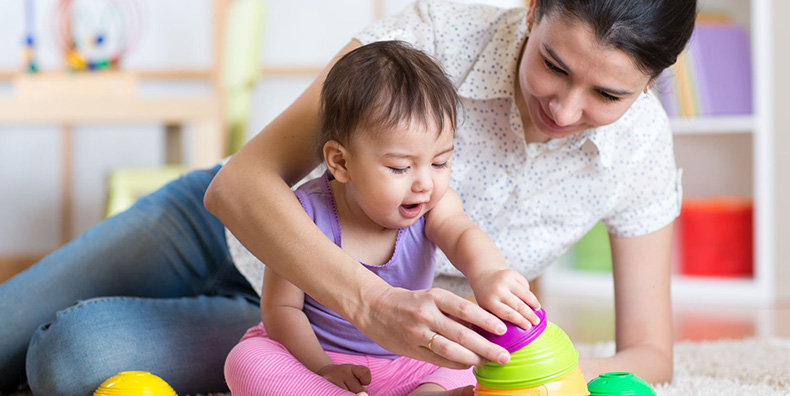
Play these games with your baby to help them learn and grow. These 10 simple brain games use everyday objects to stimulate your baby's senses, memory and understanding while you have fun together.
- Baby Show and Tell to build object recognition.
- Texture Play to learn through touch.
- Sniff a Whiff to develop their sense of smell.
- Where's Baby's Body? to learn body parts.
- Hiding Hands and Peek-a-Blue for object permanence and colours.
- Simple Directions, Memory Games, Hide-and-Seek Shapes and Quiet Time.
1. Baby Show and Tell
Everything is fascinating to your baby, so introduce them to their world with this simple activity. Hold up an object and describe it, adding descriptive adjectives. You could say, "This is an apple. It is red and round." Use fruit, kitchenware or anything around the house, and you'll be surprised how quickly your little one begins to recognise objects.
2. Texture Play
Let your baby learn through their sense of touch. Gather objects with different textures, such as a rubber duck, a stuffed animal, a plastic place mat, a piece of satin and a clean piece of fine sandpaper. Make sure none have sharp edges, are too cold or hot, or have loose strings. Place them on the play mat and describe each texture using words such as sticky, cool, soft, slippery, smooth or rough.
3. Sniff a Whiff
For the first few months most of your baby's stimulation is visual, but from 4-6 months their sense of smell starts to develop. Select several items, such as an apple, a bar of soap, your favourite perfume and Daddy's shaving cream. Place each under your baby's nose while saying, "Smell the apple. What does the soap smell like?" If your baby makes an offended face, don't offer that scent again for a while.
4. Where's Baby's Body?
This twist on classic peek-a-boo helps your baby learn body parts and develop greater body awareness. Using a small colourful cloth, cover your baby's head and say, "Where's baby's head?" After a few seconds, lift the cloth and say, "There it is!" Repeat with different parts, working down to the feet, then test your child by asking where a body part is.
5. Hiding Hands
Help your baby reinforce that things exist even when they can't see them. Show your baby you're hiding a small toy in your hand, hold both hands closed and ask them to guess which hand it's in. You may need to guide your baby at first or demonstrate with an older sibling. Express excitement whether they get it right or wrong.
6. Peek-a-Blue
Another game for when your baby starts to understand object permanence, this one also helps them learn colours. Tape brightly coloured construction paper to white pieces of paper. Present the white side first, then turn it around to reveal the colour while saying, "Peek-a-blue!" (or red, green or yellow).
7. Simple Directions
Practising simple directions will help your baby develop their cognitive thinking. Place three very different toys on the play mat. Say, "I am going to pick up the ball," then do it, and ask, "Can you pick up the ball?" Try a range of directions, always demonstrating first, repeating each 2-3 times and giving lots of praise.
8. Memory Games
Help your child develop their memory with these little games. Place 3-4 objects in front of them and give them a few minutes to memorise them. Ask them to close their eyes, remove one object and get them to tell you which is missing. You can also rearrange the order and ask them to put the objects back, varying the colours and shapes each day.
9. Hide-and-Seek Shapes
Make learning shapes and colours fun with a special version of hide and seek. Cut out basic shapes (triangles, squares, circles and rectangles) in different colours, or use plastic toy shapes. Hide them in easy-to-find spots and ask your child to find one at a time, prompting with questions like, "Is the red triangle under the bed?" to reinforce colours, shapes and the words on, off, over and under.
10. Quiet Time
Children are bombarded with stimulation, but they need quiet time to think and learn, and to learn how to sit quietly. Set aside 15 to 30 minutes for your child to just be quiet. Read a favourite book in a rocking chair, play soft songs, or lie on a blanket and watch the ceiling fan together. Keep talking and singing minimal; the key is to hear the quiet.
Do you know that an average baby will need 1057 nappy changes in the first 6 months? Get exclusive promotions and free diaper samples by joining the Huggies Club now!
"The information contained in this site is for informational purposes only and is not intended to be a substitute for professional medical advice, diagnosis or treatment. Always seek the advice of your doctor or other qualified healthcare provider with any questions you may have regarding a medical condition. You should never delay seeking medical advice, disregard medical advice or discontinue medical treatment because of information on this site. To the extent permitted by law, Kimberly-Clark excludes liability or responsibility for claims, errors or omissions on this site, and may amend material at any time without notice."